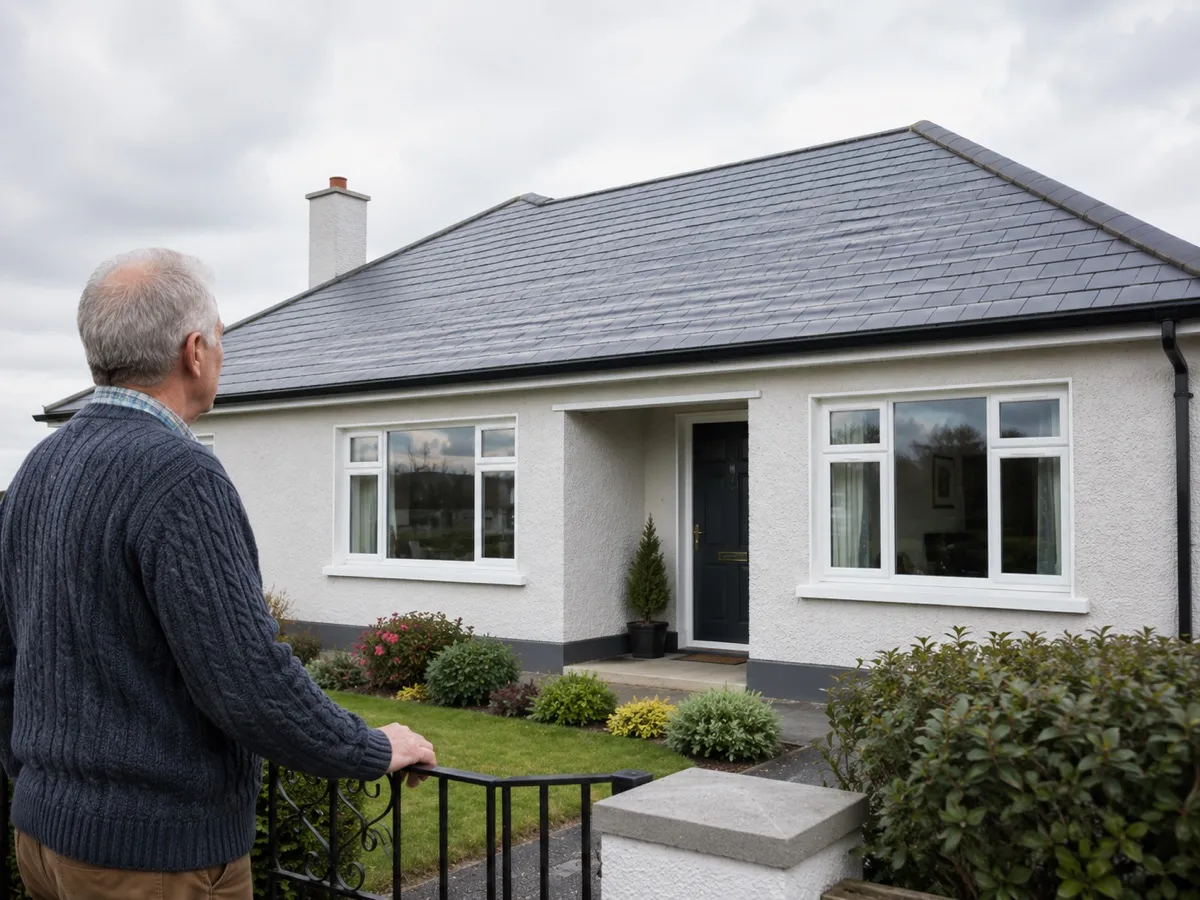
The Housing Adaptation Grant for People with a Disability is the largest of Ireland’s home adaptation grants, worth up to €40,000 to change a home so a person with a disability can live in it safely and comfortably. This guide explains who qualifies, what it covers, the income bands that decide your amount, and exactly how to apply. And if you are in Cork or across Munster, we handle the whole application for you, free.
What the grant is for
This grant funds the changes that turn an ordinary house into one that works for a person with a disability. That can be as focused as a downstairs bathroom, or as significant as an extension for wheelchair access. The test is simple: the works must make the home suitable for the needs of the person with the disability.
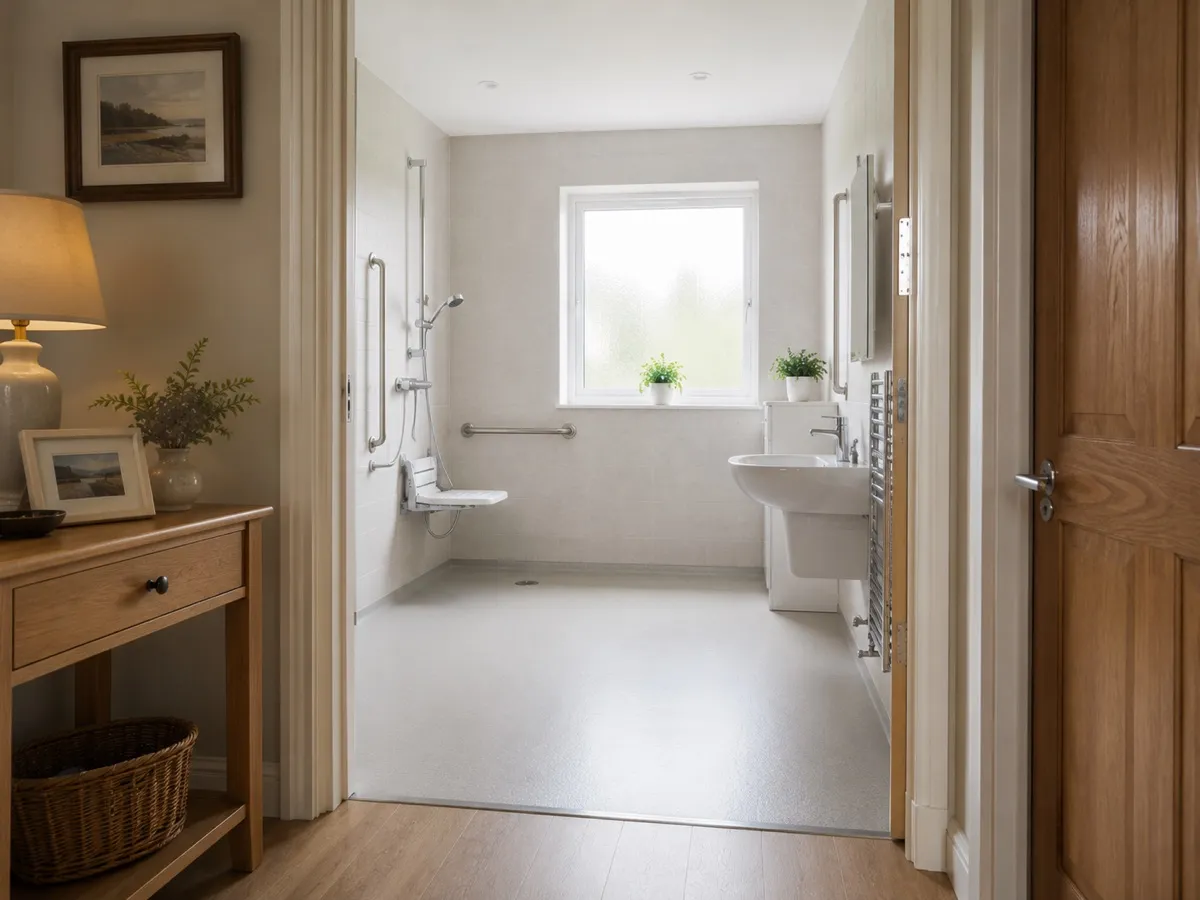
A downstairs bedroom & bathroom
The most common adaptation: a ground-floor bedroom and an accessible wet room, so daily life does not depend on the stairs.
Level access & wider doorways
Ramps, level thresholds, wider doors and hallways for a wheelchair or walking frame, inside and at the entrance.
Stairlifts & grab rails
Where the stairs must still be used, a stairlift, plus grab rails and supports in bathrooms and on steps.
Extensions & structural work
Where more space is genuinely needed, an extension or structural change to make the home fully accessible.
How much you get: the income bands
The grant covers a percentage of the cost of the works, and that percentage depends on your gross household income for the previous tax year. Disregards and deductions can reduce the income that counts, so it is worth checking properly rather than assuming you earn too much.
| What the grant covers | |
|---|---|
| Income up to €37,500 | 100% of cost, up to €40,000 |
| €37,501 to €62,500 | Sliding scale, from 100% down to 30% |
| €62,501 to €75,000 | 30% of cost |
| Over €75,000 | No grant |
The application, step by step
The paperwork is where most people get stuck, so here is the whole journey laid out. The single rule that runs through all of it: never start the works before you have written approval.
- 1
Occupational Therapist assessment
For most adaptations, an OT assesses the person’s needs and recommends the specific works. This report is the backbone of the application.
We coordinate this for you - 2
Quotes for the works
You get quotes from a contractor for the recommended works. They need to match what the OT report describes.
- 3
Complete the application
The council form, OT report, quotes, proof of income, tax details and ownership documents are submitted together.
This is the part we handle - 4
Council decision & approval
The local authority assesses eligibility and income, and issues written approval with the grant amount before any work starts.
- 5
Works carried out
Once approved, the works go ahead. Do not begin earlier: anything done before approval is not covered.
- 6
Grant paid
On completion and sign-off, with the paid invoices and any tax clearance in order, the council pays the grant.
Who can apply
The grant is for owner-occupiers, and in defined circumstances for people renting privately or living in local-authority housing. What matters is that a person with a disability lives in the home and needs the adaptation. Because it is means-tested, the amount is set by your household income, but the door is not closed just because you are working: the taper runs all the way to €75,000.
Questions people ask
Is this the same as the Housing Aid for Older People Grant?
No. They are separate grants with different maximums. The Housing Adaptation Grant (up to €40,000) is for a person with a disability; the Housing Aid for Older People Grant (up to €10,700) is for essential repairs in the home of someone aged 66 or over. We match you to the right one.
Does the grant cover the full cost of an extension?
It covers a percentage of eligible works up to €40,000, set by your income band. A large extension can cost more than the grant, so the grant reduces the cost rather than always covering all of it.
Can I choose my own builder?
Yes. You get quotes for the works the OT recommends, and the council approves the grant against those. The works must match the approved scope.
What if the person is not the homeowner?
The grant can still apply in defined cases where the person with a disability lives in the home, including some private-rented and local-authority tenancies, with the owner’s consent where needed.
The bottom line
The Housing Adaptation Grant can transform a home for a person with a disability, and at incomes up to €37,500 it can cover the whole cost, up to €40,000. The works are the easy part. The application, the OT report and the strict “approval before works” rule are where it goes wrong, so getting them right first time matters.
If you are in Cork or across Munster, Ballyhome does the paperwork for you, free of charge: the OT coordination, the forms, the quotes and the council follow-up. You can also read our guides to the Housing Aid for Older People Grant and the faster Mobility Aids Grant, and see how SEAI energy grants can run alongside an adaptation.