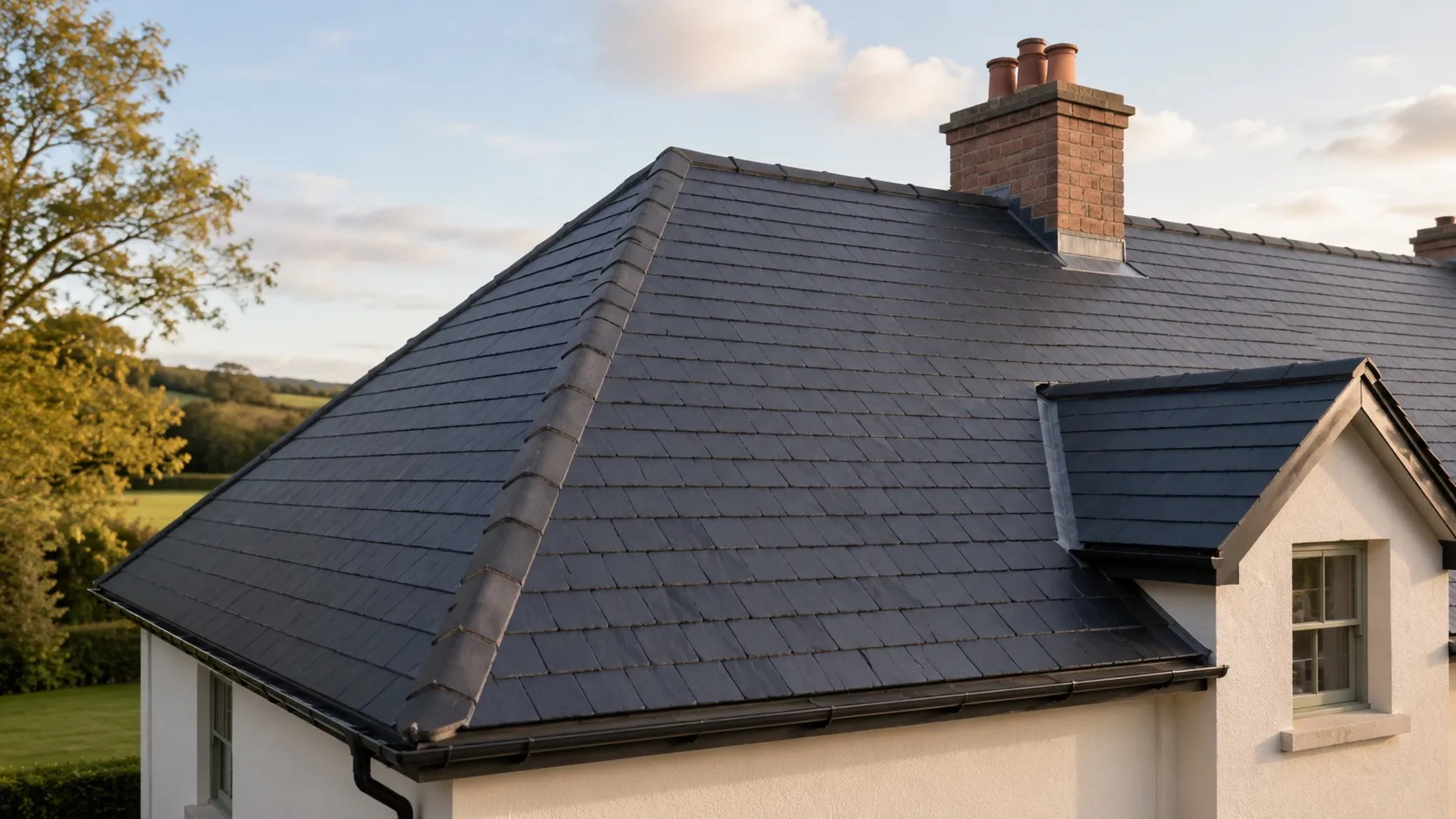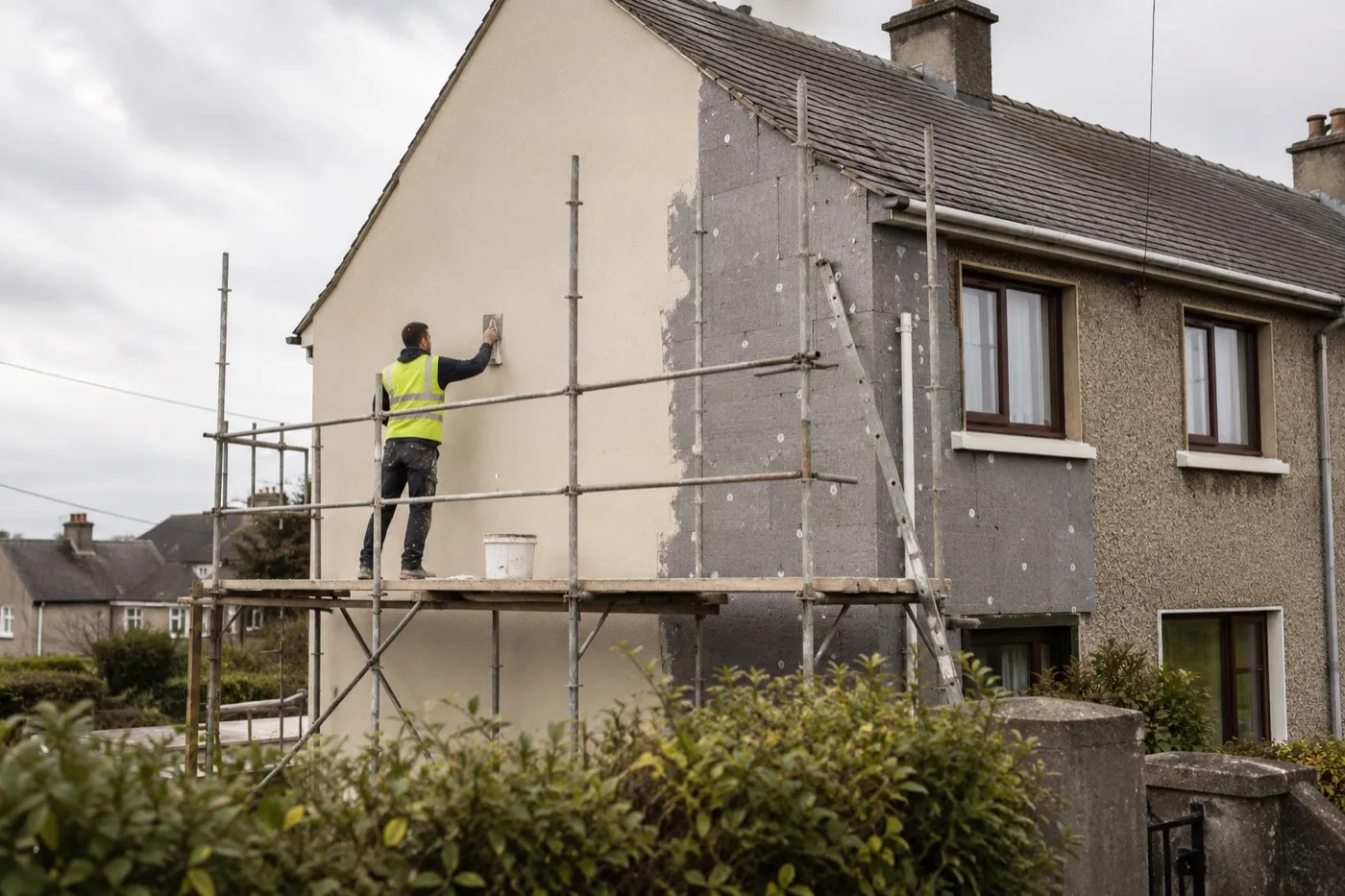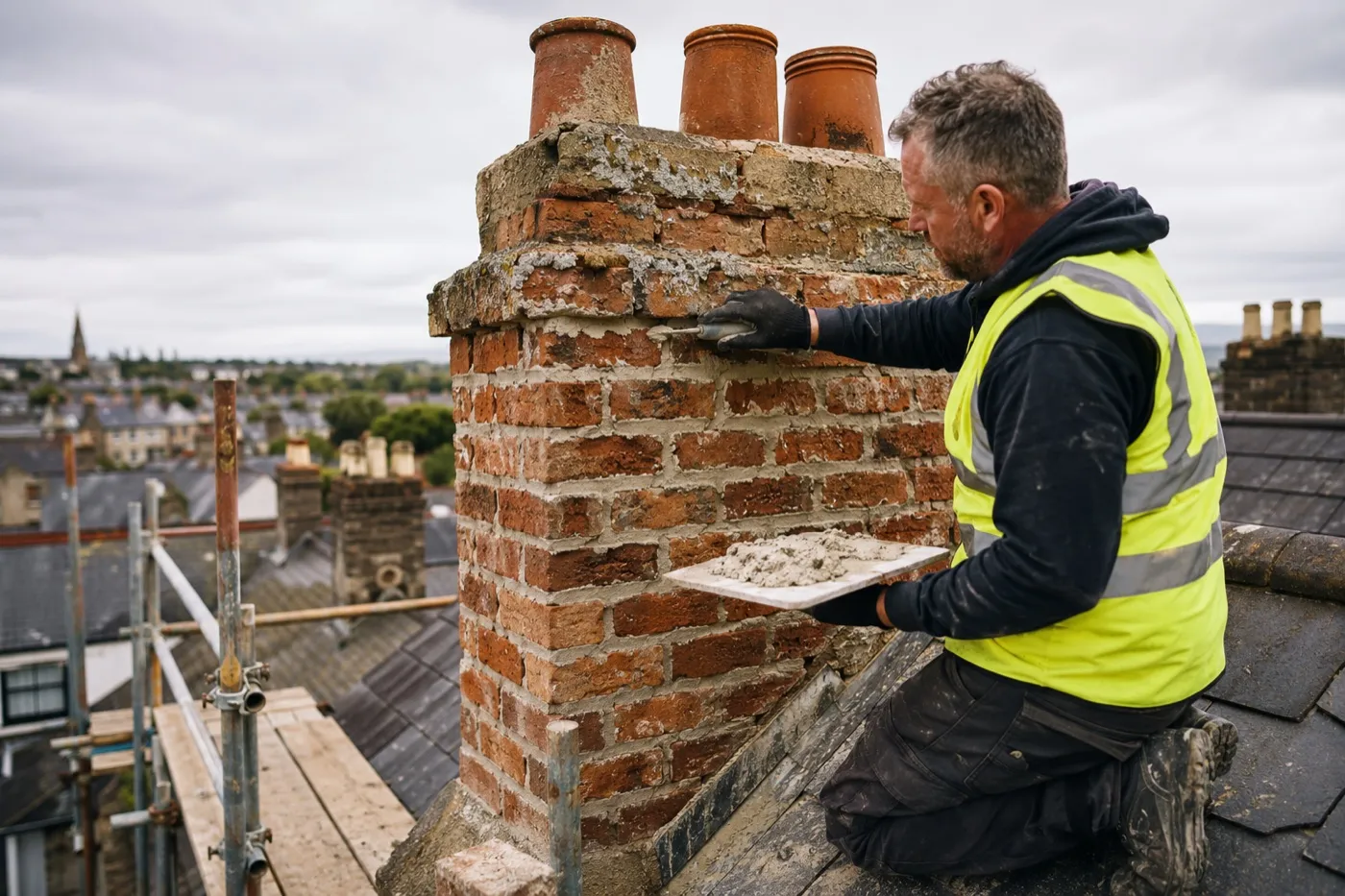
The chimney is the most exposed, most ignored part of an Irish house: it takes the worst of the weather at the highest point of the roof, and nobody looks at it for decades. Then a damp patch appears on a bedroom wall. Chimney renovation is about catching that story early, and this guide covers the warning signs, what the work involves, what drives the cost, and the heat an unused flue quietly bleeds all winter.
The warning signs, from the ground
You can read most of a chimney’s health from the garden with your phone camera zoomed in.
Crumbling mortar joints
Weathered, recessed or missing pointing lets water straight into the stack. The earliest and cheapest problem to fix.
Spalling brick faces
Frost pops the face off saturated bricks, leaving rough red scars. A sign water is already inside the masonry.
Cracked flaunching & loose pots
The mortar crown around the pots splits with age. Loose pots and broken flaunching are how storms turn a repair into an emergency.
Damp on the chimney breast
Staining or peeling paint beside the fireplace, upstairs especially, means water is tracking down inside the stack. Inside evidence of an outside problem.
What a renovation involves
The heat-loss angle nobody mentions
Here is the energy story hiding in the roofline: an open, unused flue is a permanent hole in your home’s insulation. It was designed to pull air up and out, and it keeps doing exactly that after the last fire goes out, drawing your heated air into the sky every hour of the winter. Capping the flue with a vented cap, or fitting a chimney balloon as the light-touch fix, closes a loss that undermines the insulation you have paid for elsewhere. If you are sealing the envelope of the house, the chimney belongs on the list.
Cost, honestly
Chimney pricing has one dominant ingredient: access. The scaffolding to reach a stack safely can rival the masonry work itself, which leads to the one money-saving rule that matters: bundle it. If the roof needs attention too, doing chimney and reroofing under the same scaffold costs far less than two separate projects. Repointing and flaunching sit at the modest end; partial rebuilds are the substantial end; and for homeowners aged 66 or over, essential roof and chimney repairs can qualify for the Housing Aid for Older People Grant of up to €10,700.
Questions people ask
Can you repoint a chimney without scaffolding?
Small jobs are sometimes done from towers or platforms, but proper work on a full stack needs safe access all round, and shortcuts show in the workmanship. If a quote seems too cheap, ask how they plan to reach the back of the stack.
My chimney is fine but never used. Do anything?
Cap it with a vented cap. It is a small job that ends rain entry, bird nests and the constant warm-air draught up the flue, while the vent keeps the stack dry inside. The best value chimney work there is.
Does a capped flue need ventilation?
Yes. A sealed, unvented flue traps moisture and breeds damp inside the stack. Proper caps ventilate while keeping rain out, and a balloon lower down still leaves the top breathing.
Will you show me what you found up there?
Always. Nobody can check work they cannot see, so we photograph the stack before and after, and the handover documents what was done. That is standard on every Ballyhome job.
The bottom line
Chimneys fail slowly, from water, and then suddenly, in storms. Reading the signs early keeps the work at the repointing end of the price range; bundling it with roof work shares the scaffold; and capping an unused flue turns a heat leak into a sealed, dry stack. All of it starts with someone actually looking.
If you are in Cork or anywhere in Munster, book a free assessment and we will survey the stack, photograph what we find, and give you the honest version: repair, rebuild, or simply cap it and stop the draught.