Complete home insulation means wrapping the whole house in a continuous warm layer: attic, walls, floors and the draughts in between. It is the single most effective upgrade an Irish home can get, because it attacks the reason bills are high in the first place, and SEAI grants support every major measure in the package. Here is what a whole-home job involves, the right order to do it, what it costs, and how the grants stack up.
- What it covers
- Attic, walls, floors & draughtsthe full envelope of the house
- The right order
- Attic first, then wallscheapest and fastest payback first
- Grant support
- Every major measureattic, cavity, internal and external wall
- Biggest grant
- Up to €8,000for external wall insulation
- Who must do it
- An SEAI-registered contractorfor the grants to apply
Why whole-home beats piecemeal
Heat does not care which wall it escapes through. An un-insulated home loses roughly a quarter of its heat through the roof and around a third through the walls, and insulating one surface while ignoring another just moves the problem. A complete job treats the house as one envelope, which is why it delivers the results a single measure never quite manages: a home that holds its heat, lower bills that repeat every year, and a BER that jumps bands instead of creeping.
The right order to insulate a house
- 1
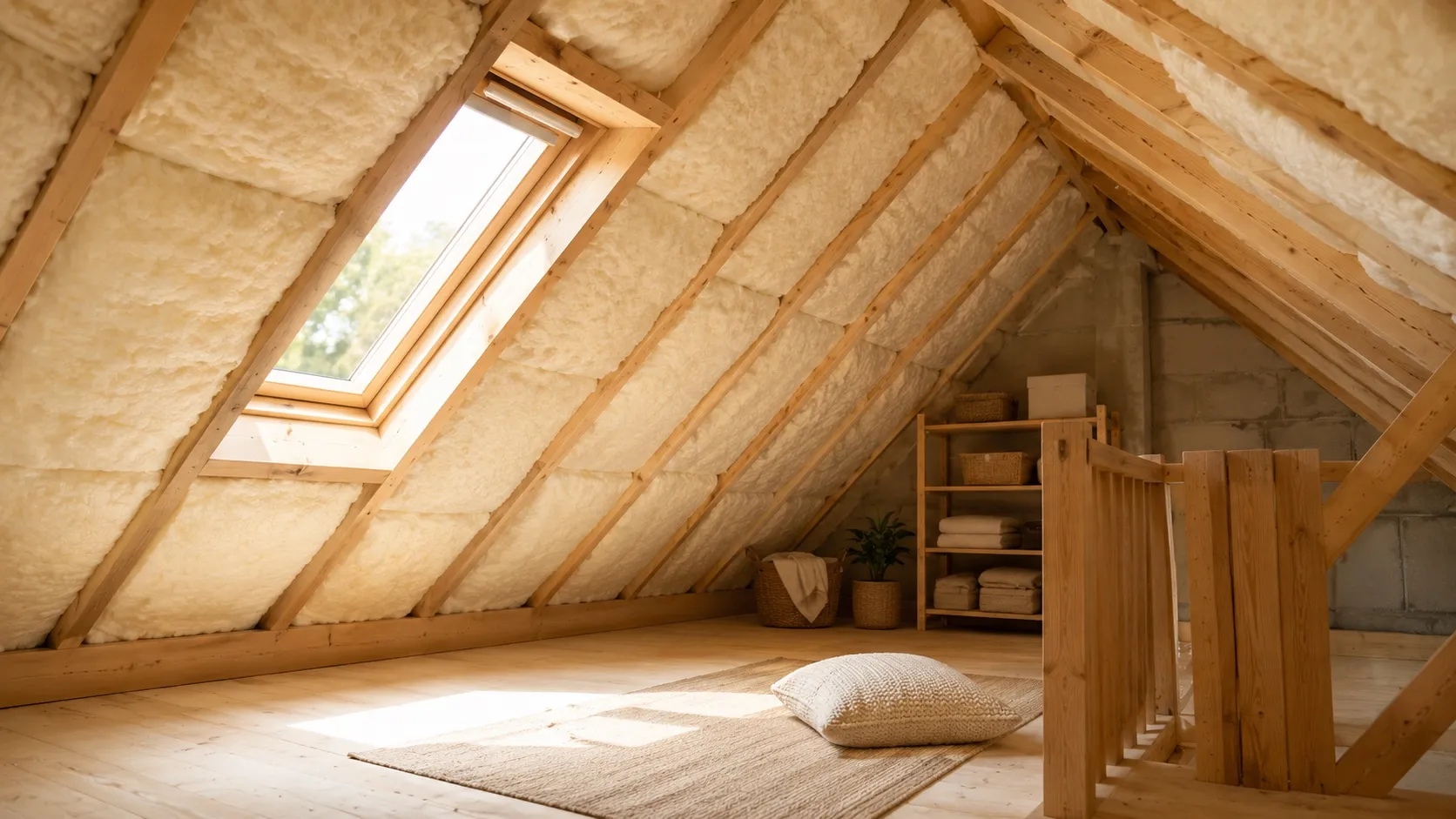
Attic insulation
The cheapest measure with the fastest payback. Topping up the attic to the current standard stops the single biggest easy loss.
Grant up to €2,500 - 2
Walls, by construction type
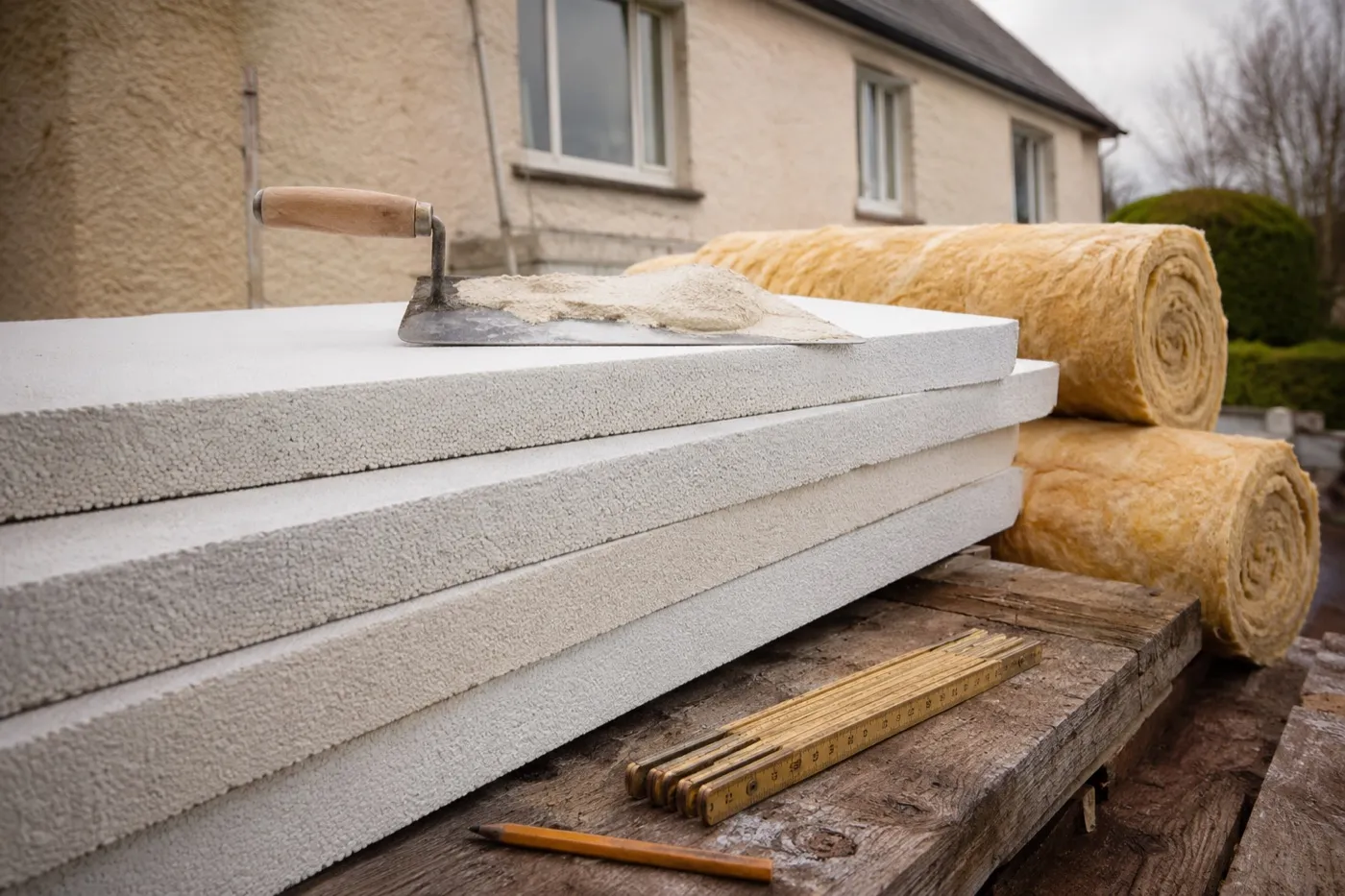
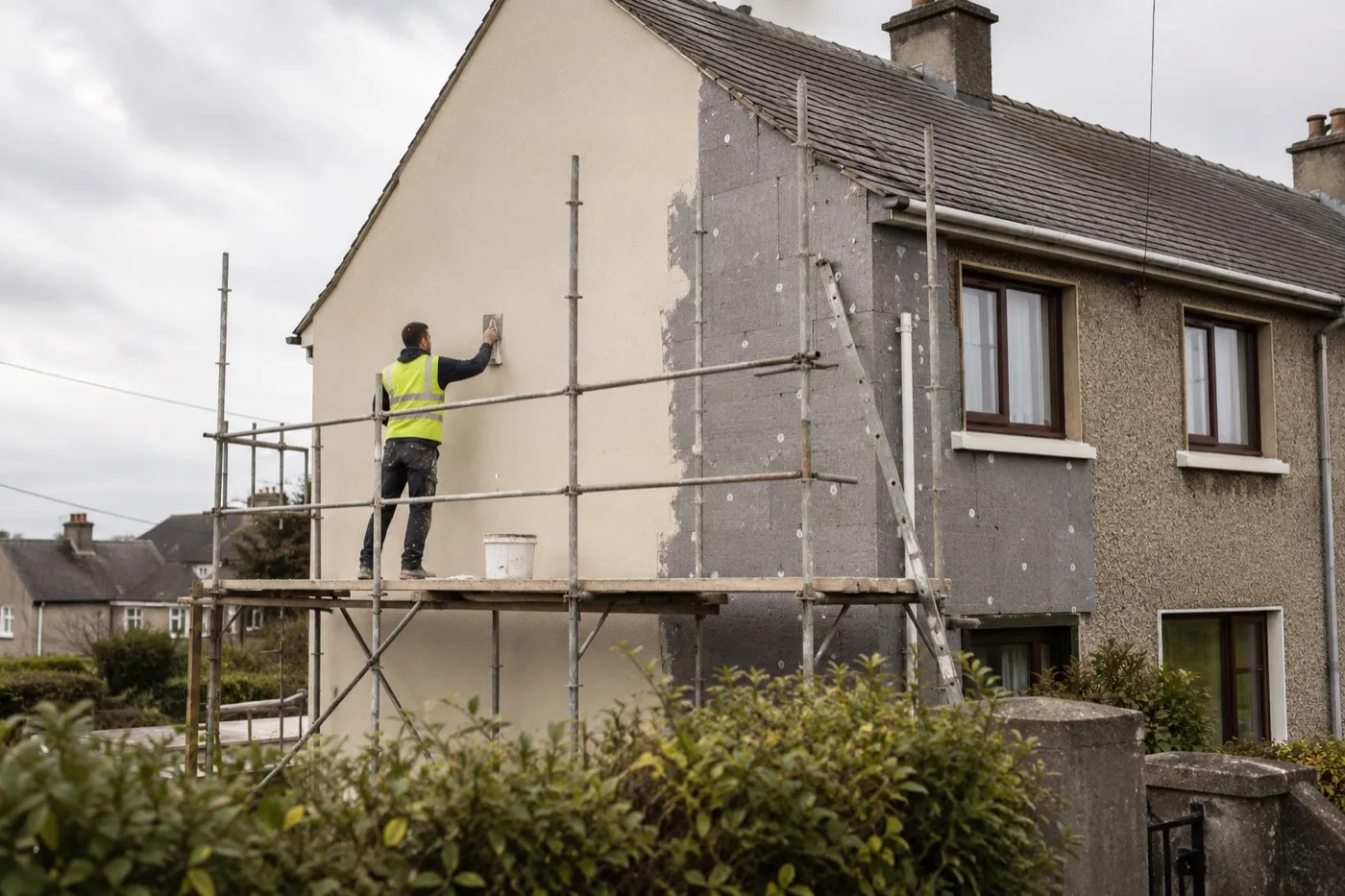
Cavity walls get pumped insulation. Solid walls get external insulation (the best performer) or internal insulation where external is not an option.
Grants €1,500 to €8,000 - 3
Airtightness & draughts
Sealing around doors, windows, floors and the attic hatch. Cheap work that protects the performance of everything above.
- 4
Floors, where practical
Ground floors lose heat too. Suspended timber floors are the usual candidates, often done alongside other works.
- 5
Then the heating system
Only after the fabric is warm does a heat pump or new heating make sense, because now the house needs far less heat to stay comfortable.
Which wall method fits your house
The walls are where a complete job is won or lost, and the right method depends on how your house is built.
| Cavity fill | External (EWI)best performer | Internal (IWI) | |
|---|---|---|---|
| Suits | Cavity-wall homes (roughly 1940s on) | Solid or cavity walls, whole-house upgrades | Solid walls where outside can’t change |
| Disruption | Minimal, done from outside in a day | None indoors, scaffolding outside | Room by room, redecorating needed |
| Bonus | Cheapest wall measure | New render finish, no lost space | Room-by-room phasing possible |
| SEAI grant | Up to €2,300 | €3,000 to €8,000 | €1,500 to €4,500 |
Deep dives on each: cavity wall insulation, external wall insulation and internal wall insulation.
What a complete job costs
Every house is different, so honest numbers come as ranges. Attic and cavity are the low-cost, high-return end: often a few hundred euro net after grants. External wall insulation is the big investment, typically a five-figure job before its €3,000 to €8,000 grant, and it transforms both the warmth and the look of the house. A complete package for a typical semi-detached home lands between those poles, and the grants stack measure by measure.
Book a free assessment for your exact figure.
What it is like to live through
The honest version: attic and cavity are done in a day with almost no disruption. External insulation means scaffolding outside for a few weeks but nobody in your rooms. Internal insulation is the disruptive one, done room by room. Every Ballyhome job ends with the making good: plaster, reveals, sills and finishes returned properly, with before and after photos and a documented handover. And if the roof itself needs attention, reroofing is the moment to combine the two.
Common questions, answered straight
Is it worth insulating an older house?
Usually the older the house, the bigger the win, because it is starting from a worse baseline. Solid-wall homes see the most dramatic change from external insulation. The method just has to match the construction, which is what the assessment establishes.
Will the house feel different?
Yes, and quickly. Rooms hold their temperature, cold spots and draughts disappear, and the heating runs far less. Most homeowners notice the difference the first cold week.
Does insulation cause damp?
Done properly, no: a correctly detailed job with ventilation handled actually reduces condensation, because warm wall surfaces stay above the dew point. Read our full guide on insulation and damp for the honest detail.
How do the grants actually get claimed?
The works must be done by an SEAI-registered contractor, and the grant is claimed against the completed measure. We check your eligibility at the free assessment and handle the paperwork, so the grant is sorted before work starts.
The bottom line
A complete insulation job is the foundation every other upgrade stands on. Do it in the right order, attic first, then walls by construction type, then airtightness and floors, and the grants cover a meaningful share at every step. The result is a warmer home, a smaller bill, and a better BER, all from one planned piece of work.
If you are in Cork or anywhere in Munster, book a free home energy assessment. We survey the whole envelope, price the package with your SEAI grants included, and you decide the pace.