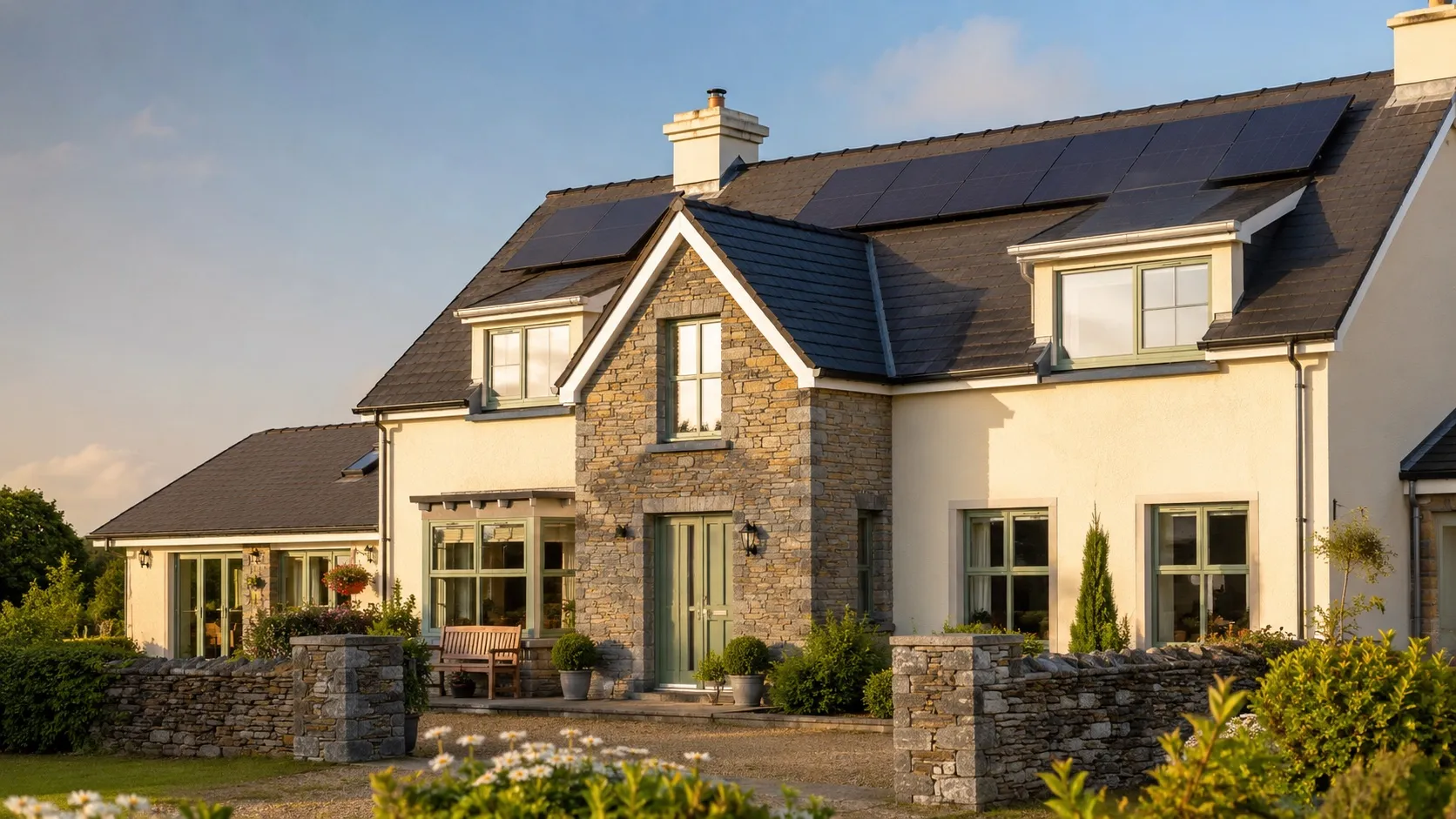
Solar panels turn your roof into a small power station, and with the SEAI solar PV grant worth up to €1,800, plus rising electricity prices, they are one of the most popular home upgrades in Ireland. Here is exactly how the grant works, whether your roof suits solar, the three ways panels pay you back, and how to apply.
The SEAI solar PV grant, tier by tier
The grant is paid per kWp (kilowatt-peak) of panels installed, in two tiers, up to a cap. It is calculated pro-rata, so partial values still count.
€700 per kWp for the first 2 kWp installed. That is up to €1,400 on its own, the bulk of the grant.
€200 per kWp for capacity between 2 and 4 kWp, adding up to €400 more.
The maximum grant is €1,800. Systems of 4 kWp or larger receive the full €1,800, but there is no extra grant beyond that. A typical 3.5 kWp system receives about €1,700.
The three ways solar pays you back
Free electricity you use
Every unit your panels generate and you use during the day is a unit you don’t buy from the grid, at full retail price.
Payments for what you export
Excess electricity you don’t use is sold back to the grid under the Clean Export Guarantee, and your supplier pays you for it.
The grant cuts the cost
Up to €1,800 comes straight off the install price, shortening the payback before the panels start earning.
The single biggest lever on your return is self-consumption: the more of your own solar you use during the day, the more you save. Running the dishwasher, washing machine or a hot-water immersion while the sun is up turns free generation into real savings.
Does your roof suit solar?
South, east and west-facing roofs with little shading are ideal, but many Irish roofs work well. Tick what applies to your home:
If your roof is near the end of its life, it is worth handling the reroofing first so the panels go onto a sound roof.
What size system, and what does it cost?
Most Irish homes install between 3 and 6 kWp. Because the grant maxes out at 4 kWp of eligible capacity, many homes size around that, balanced against roof space and how much electricity they use. The net cost is the install price minus your grant, and it varies with system size, panel choice and whether battery storage is added.
Solar myths, answered
Solar doesn’t work in Ireland’s weather.
Panels generate from daylight, not just direct sun, so they produce meaningfully across the Irish year. Output is lower in mid-winter and highest in summer, but the annual total makes the maths work.
You need a battery to benefit.
No. A battery increases how much of your own generation you use, but plenty of homes get a strong return without one, especially if they use electricity during the day and export the rest.
Solar is only worth it if you’re home all day.
Being home during daylight helps, but you can shift loads like the dishwasher, washing machine and immersion to daytime, and export the surplus. Both routes pay.
The panels will wear out quickly.
Quality panels are warrantied for decades and degrade only slightly over time, so they keep generating long after they have paid for themselves.
How to apply
The solar PV grant is one of the simpler ones: it does not require a post-works BER, only that the installation is carried out by an SEAI-registered company. We survey your roof, confirm the right system size and your grant, install, and register you for export payments.
The bottom line
With the grant holding at up to €1,800, rising electricity prices and payments for what you export, solar PV is one of the strongest-value upgrades available in Ireland, and one of the easiest to claim. Pair it with a warm, efficient home and the savings compound.
If you are in Cork or across Munster, book a free assessment and read our complete guide to SEAI grants to see how solar fits with insulation and a heat pump.