Every guide on this blog ends the same way: book a free assessment. Fair enough, but what actually happens when you do? Here is the whole visit, step by step: what we look at, what you get in writing, what it costs (nothing), and what happens after (nothing, unless you decide otherwise). No mystery, no pressure, exactly as it should be.
The visit, start to finish
- 1
You tell us the story
Which rooms never warm up, where the draughts live, what the bills look like. The cold-room list steers the whole survey.
Bring a recent bill if handy - 2
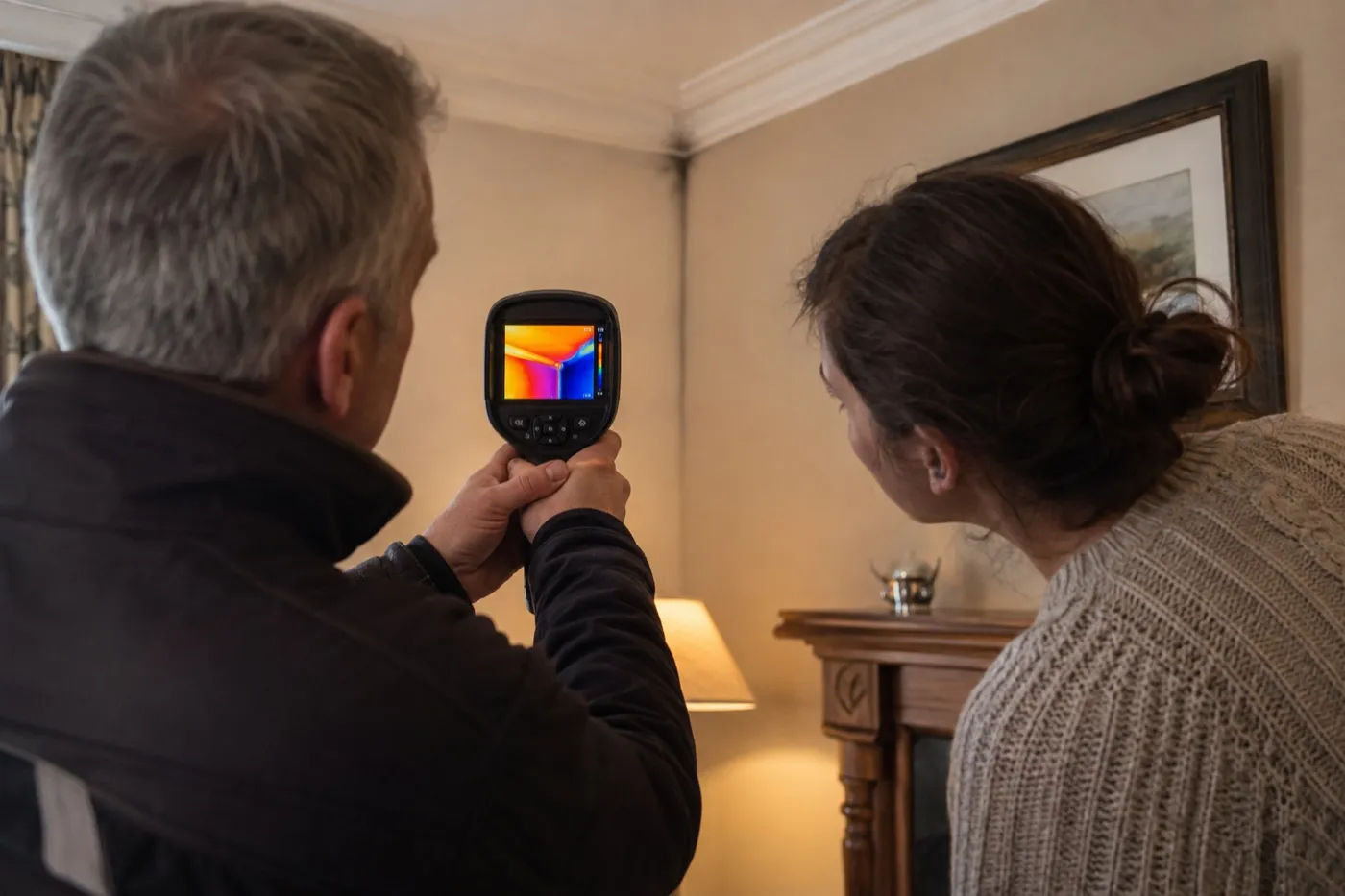
We survey the fabric
Attic depth, wall construction, windows, floors and draught points, measured and photographed as we go.
- 3
Heating and roof get a look
The boiler or heat pump, controls, and the roof and chimney from ground level, because the fabric plan and the heating plan belong together.
- 4
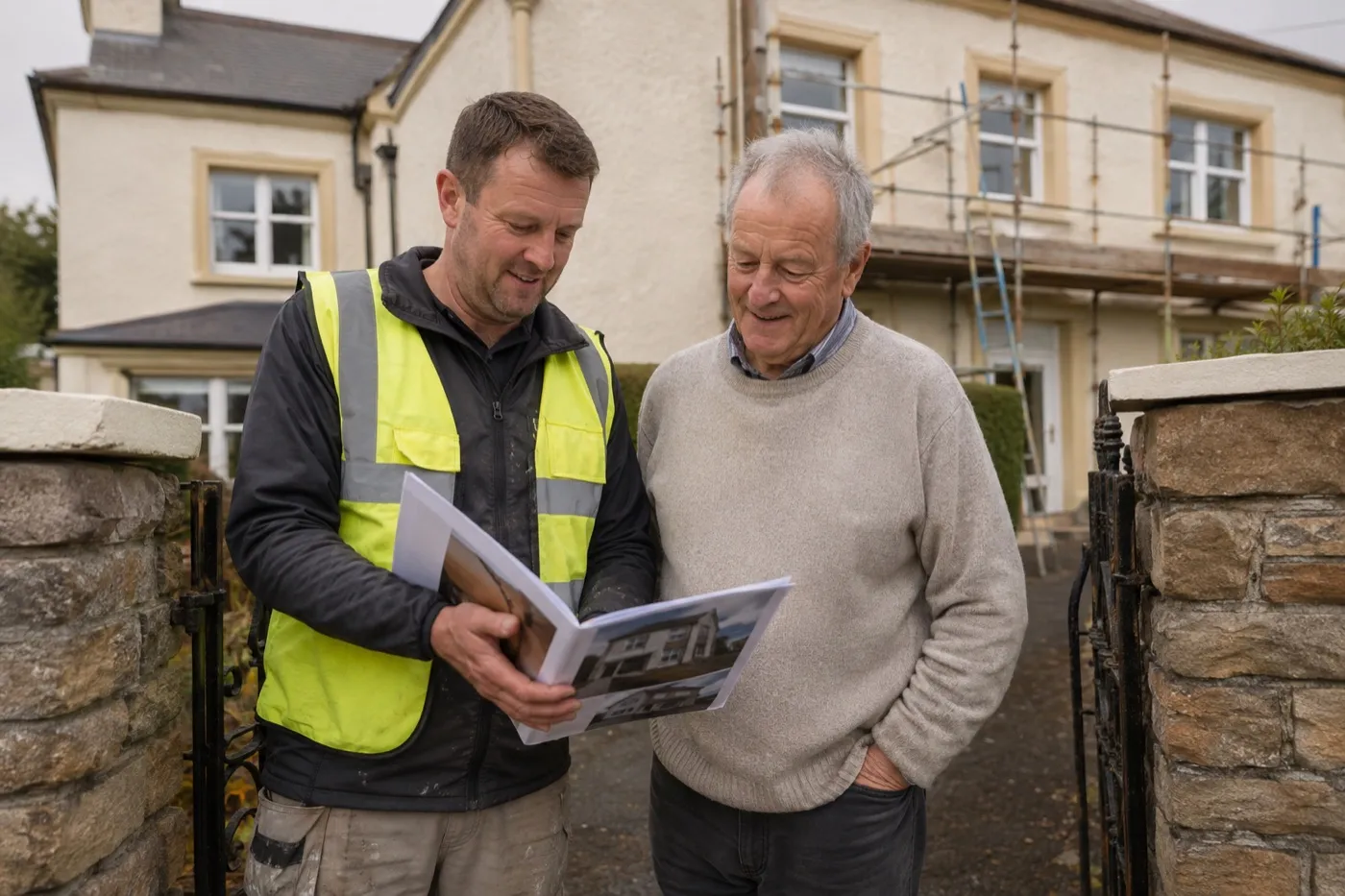
We talk it through on the spot
What we found, what matters most, and what can wait. You hear the reasoning, not just the conclusion.
- 5
You get it in writing
The recommended measures in the right order, the SEAI grant against each, and honest price ranges. Then the decision is yours, at your pace.
No follow-up pressure
What we actually look at
Depth and condition of existing insulation, the hatch, ventilation and any storage decking compressing the layer. The cheapest wins usually live up here.
Cavity or solid, current condition, and which insulation method the construction genuinely suits. This decides the biggest measure on the plan.
Doors, windows, skirting, the attic hatch and suspended floors: the airtightness picture that makes rooms feel colder than the thermostat says.
System type, age and controls, assessed in fabric-first order: insulate first, then size the heating for the warmer house.
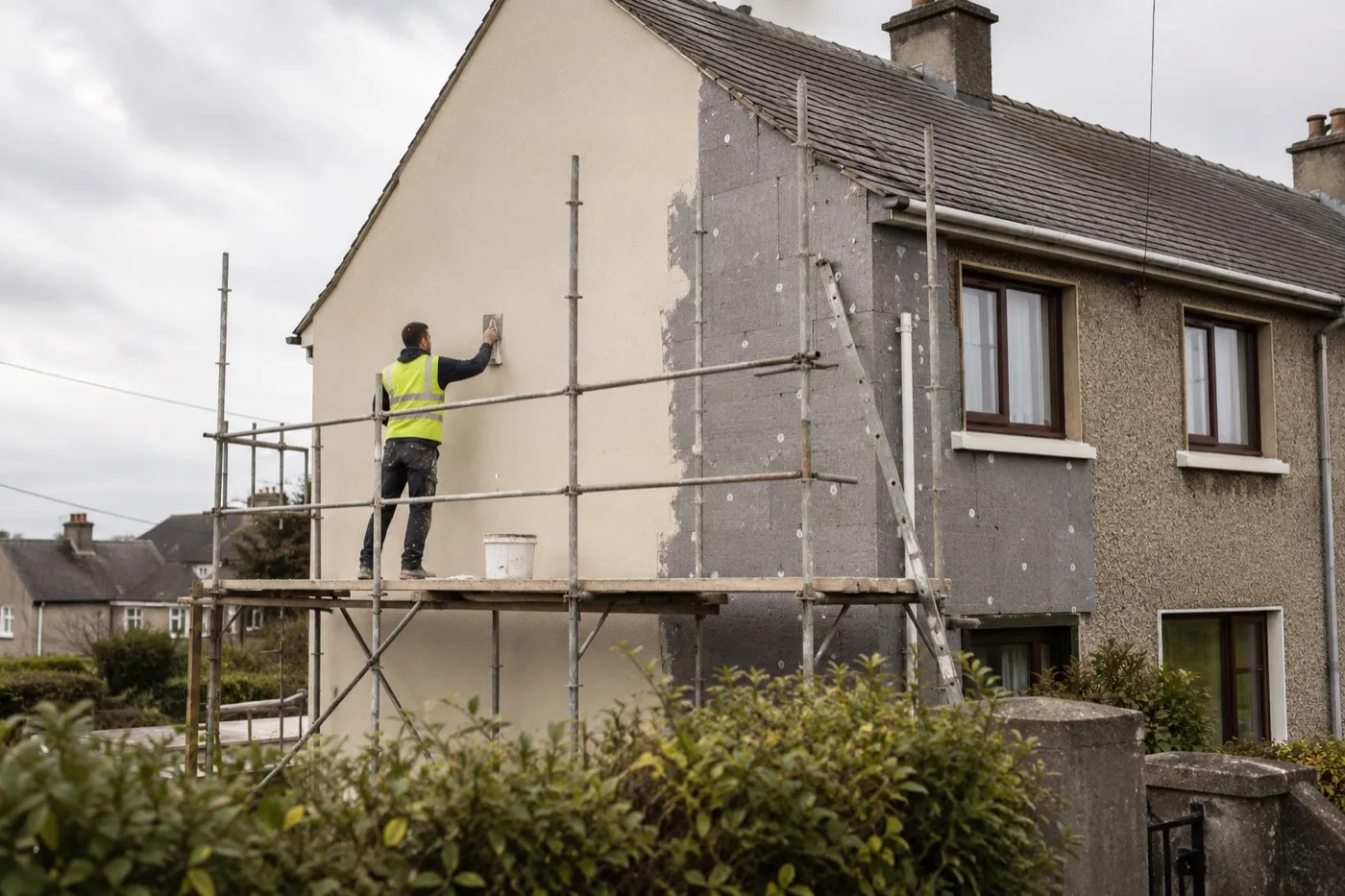
Condition from the ground, unused open flues bleeding heat, and whether any roof work should share scaffolding with wall insulation.
What you walk away with
One document, in plain language: where your home stands today, the measures that fit it, the order that pays best, the SEAI grant against each measure, and honest price ranges. It is the same plan whether you do everything this year, phase it over three, or file it in a drawer. And if a formal BER is needed for a grant, we tell you at this stage, not after.
Questions people ask
Why do you do this for free?
Because honest scoping is how good jobs start, and because enough people who get a clear plan choose us to do it. The economics are that simple, and the plan being yours either way is what keeps us honest at the door.
Can you assess a house I am buying?
Yes, with the seller’s access arranged. An assessment before you buy tells you what the upgrade path and grants look like, which is powerful information at negotiation time.
Do you assess rentals and older houses?
Both. Rental upgrades affect BER and lettability, and older solid-wall homes are often where the biggest transformations live. The survey adapts to the building in front of it.
What areas do you cover?
Cork and all of Munster: Kerry, Limerick, Tipperary, Waterford and Clare. If you are unsure, ask, the answer is probably yes.
The bottom line
An hour of your time, nothing from your pocket, and you end up holding the thing most homeowners never have: a written, sequenced, grant-aware plan for your actual house. Whatever you do with it, that beats guessing.
Book your free home energy assessment for anywhere in Cork and Munster. Have the kettle on and the cold-room list ready; we will bring the tape measure and the straight answers.