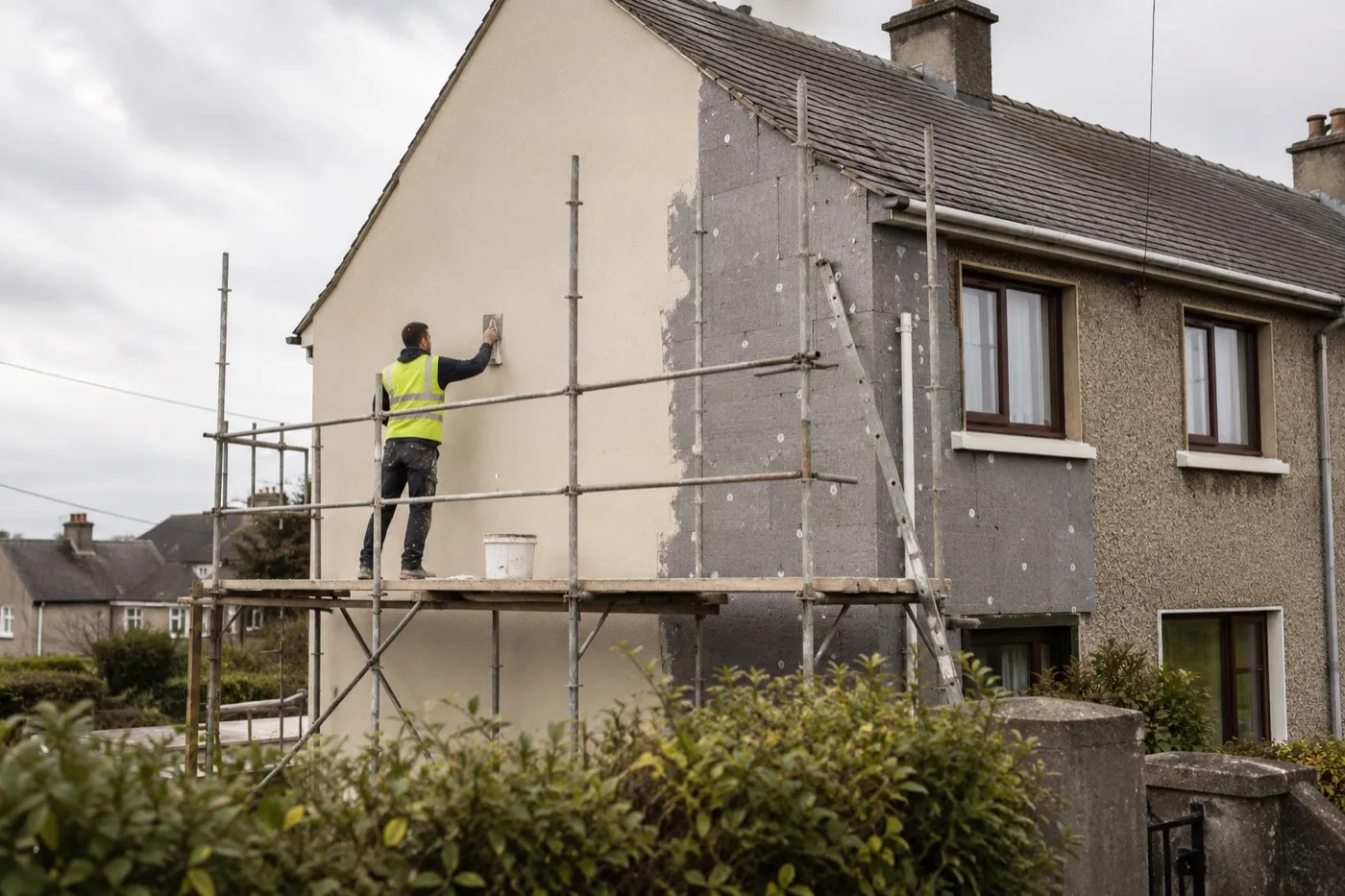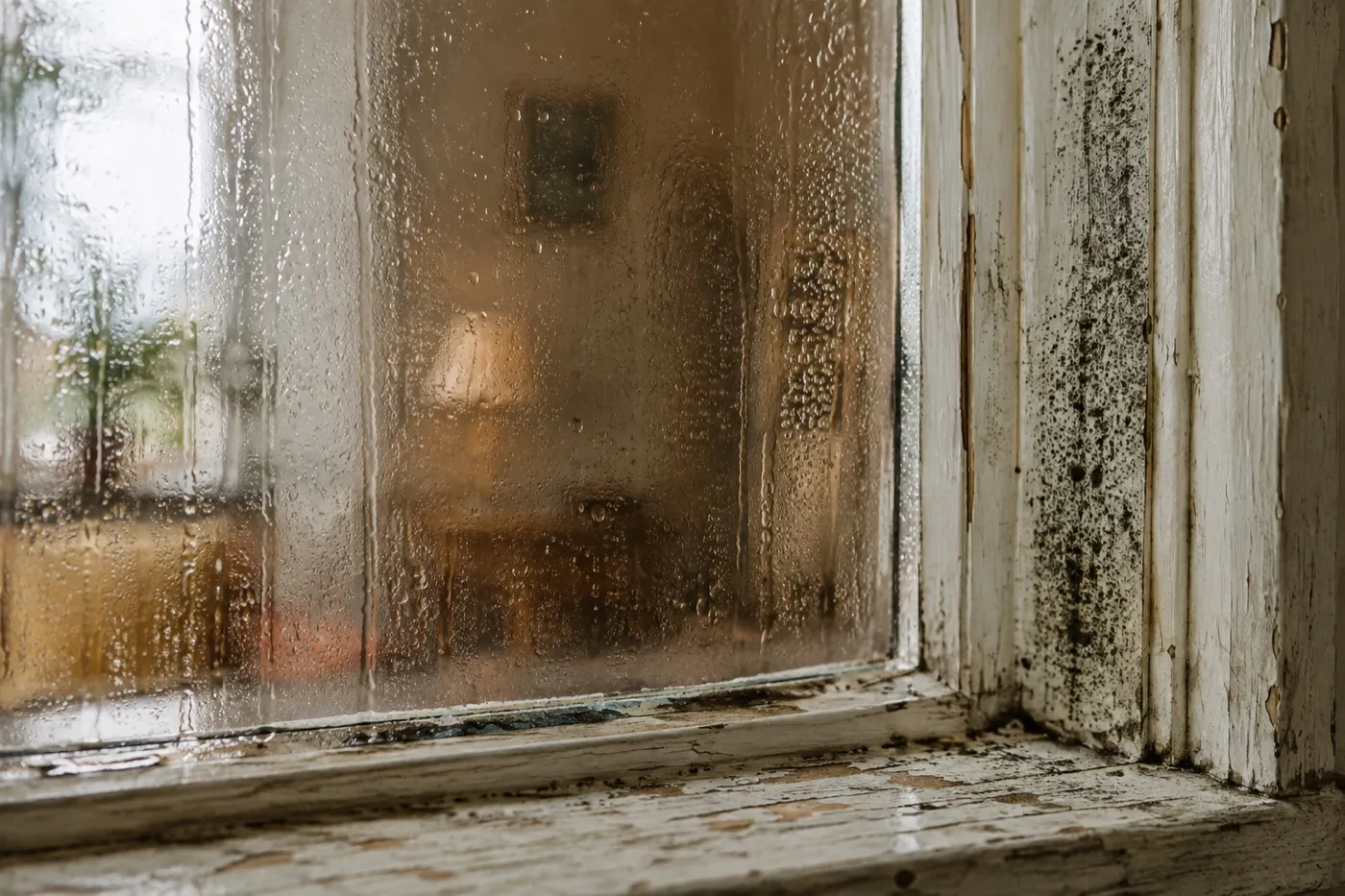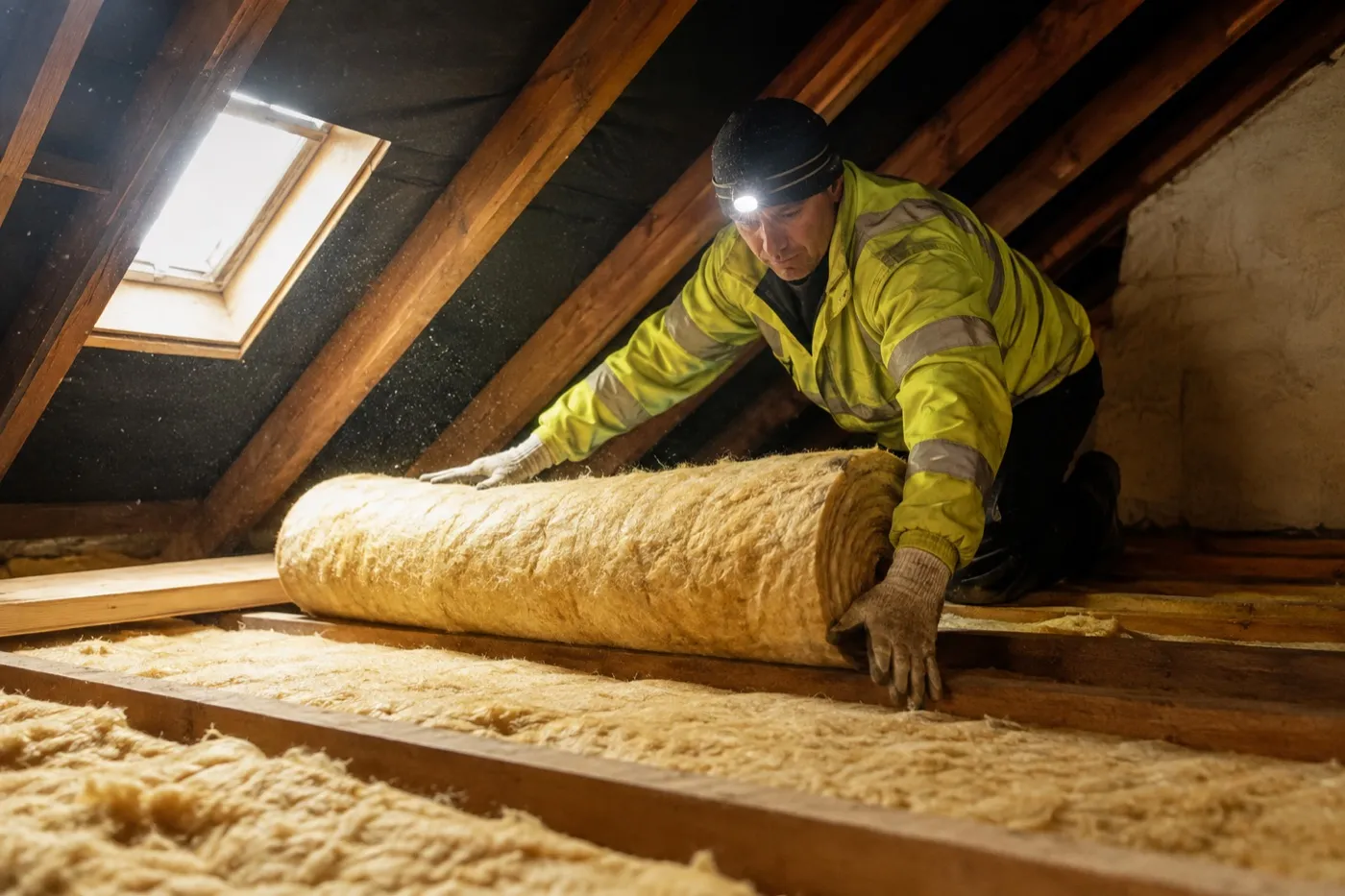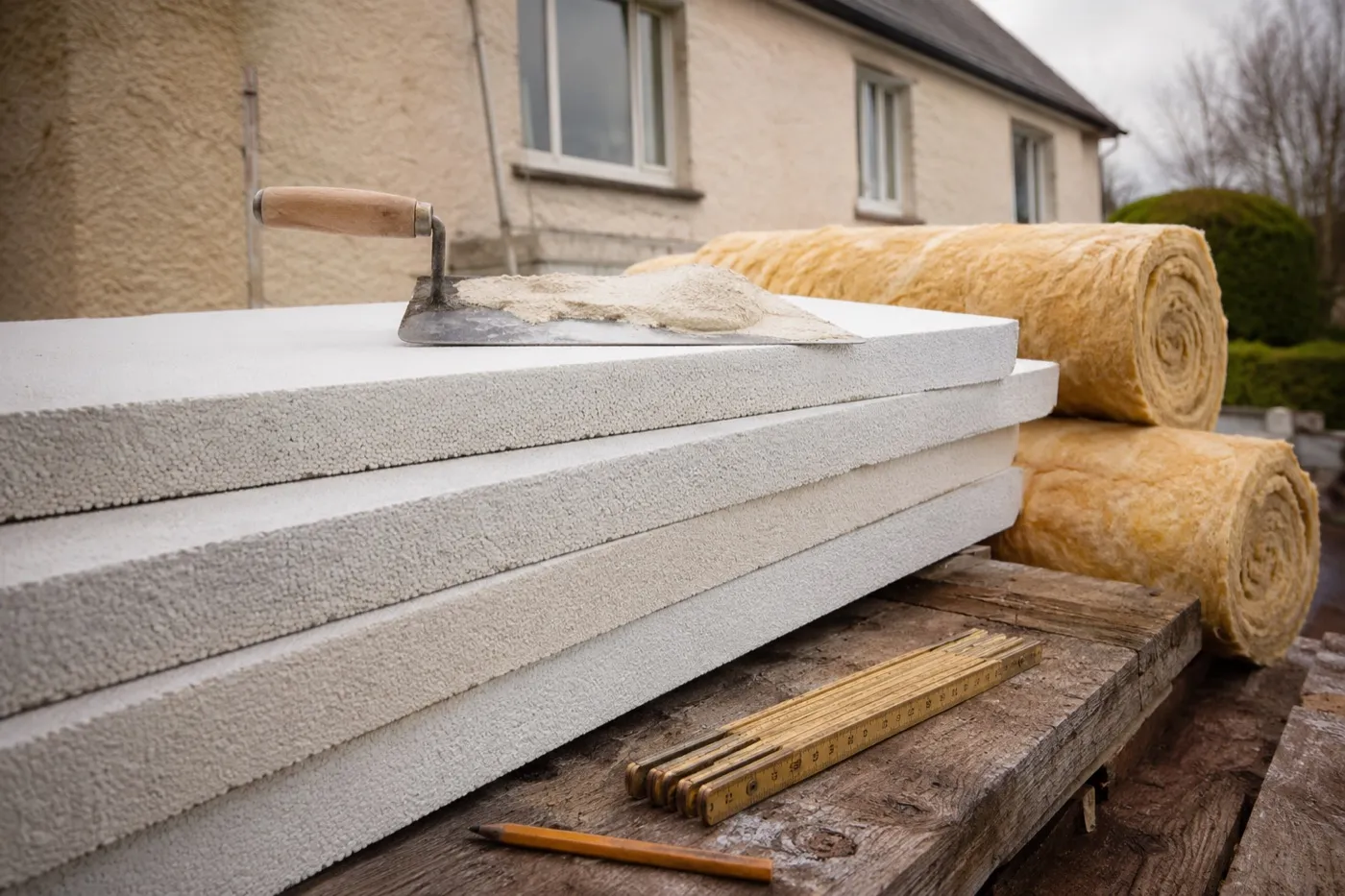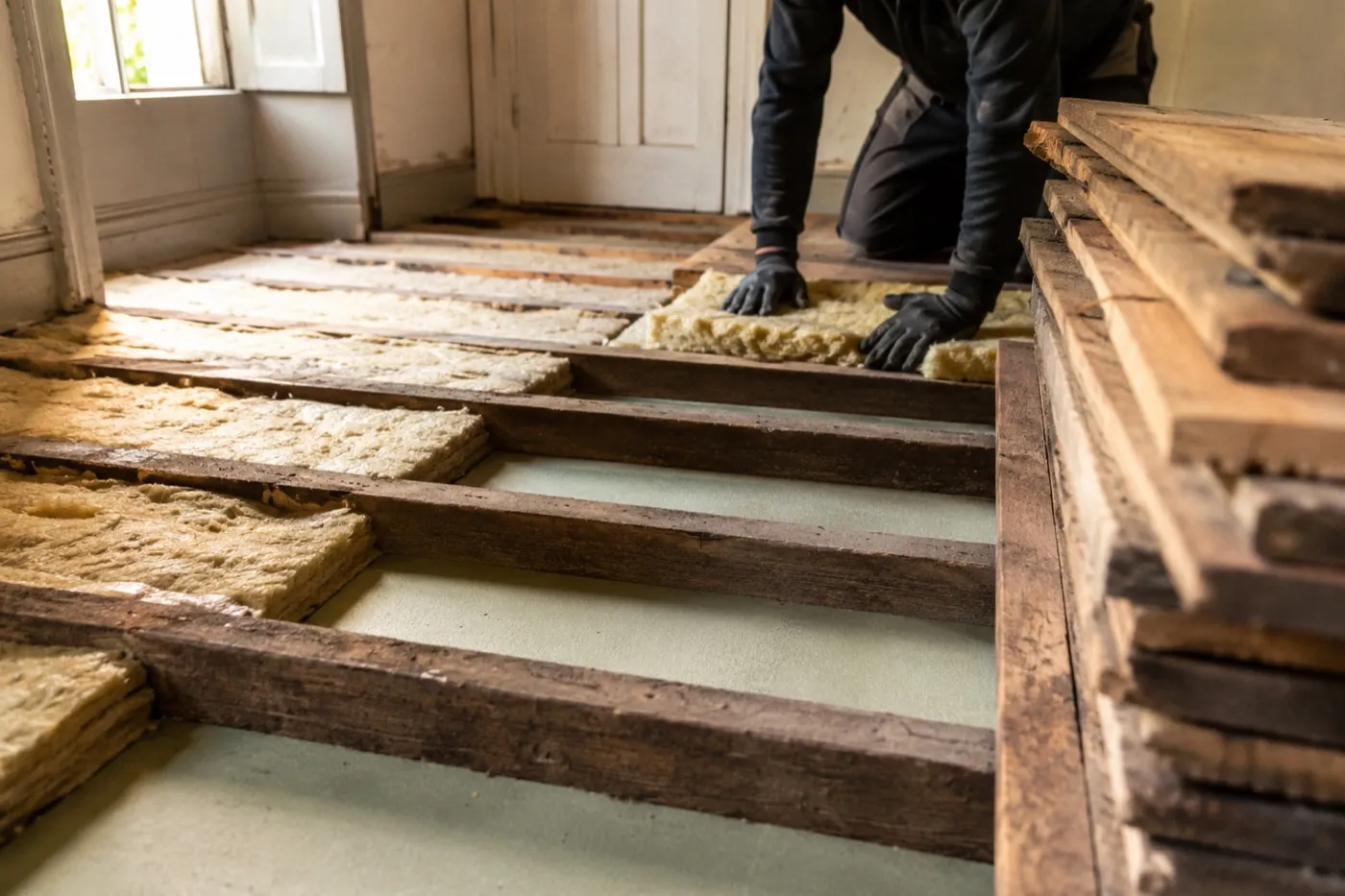
Everyone talks about attics and walls. Nobody talks about the surface you actually stand on all winter. Floor insulation is the forgotten piece of an Irish home’s fabric, and in older houses with suspended timber floors it is often why a room never feels warm no matter what the heating does. Here is how it works for each floor type, what it costs, and the honest truth about grants that most pages skip.
Why cold floors make whole rooms cold
An un-insulated ground floor does two bad things at once. It radiates cold, so your feet and the bottom metre of the room never warm up. And in older homes with suspended timber floors, the ventilated void underneath feeds cold air up through every gap between the boards, a constant draught you feel as “this room just won’t heat”.
The two floor types, and how each is insulated
The classic older-home floor: boards on joists over a ventilated void. The boards are lifted, insulation fits snugly between the joists on netting or battens, an airtight breathable membrane seals the gaps, and the boards go back. The void stays ventilated so the timber stays dry.
Two routes. In a renovation, rigid insulation goes beneath a new screed, the best result. Otherwise insulation can sit on top of the slab under a new finish, raising the floor slightly, with doors and thresholds trimmed to suit. Most practical during bigger works.
Stamp your heel: a hollow sound and a slight spring usually means suspended timber; dead solid means concrete. Vents on the outside wall near the ground are another giveaway of a suspended floor. A survey confirms it in minutes.
When floor insulation makes the most sense
During a renovation
Floors up, rooms empty, trades on site. Adding insulation while the floor is already open costs a fraction of a standalone job.
When replacing flooring
New boards or a new finish going down anyway? That is the moment to insulate underneath, almost free access.
In a whole-home upgrade
As part of a One Stop Shop deep retrofit, floor insulation joins the package and contributes to the post-works BER target.
When a room defies heating
A ground-floor room that never warms, with draughts at the skirting, is the classic suspended-floor case, worth fixing on its own merits.
What it costs, honestly
A suspended timber floor is a moderate, room-by-room job: lifting and relaying boards is most of the labour, so the price follows floor area and how careful the boards need to be. Concrete floors are really a renovation decision rather than a standalone upgrade. In both cases the same rule applies: bundled works are cheaper works, because access, disruption and making good are shared. That is why floors sit third in the fabric-first order, timed for when the house is already being worked on. See how the numbers compare across every measure in our insulation cost guide.
Questions people ask
Will insulating the floor cause damp in the timbers?
Not when done properly. The under-floor void keeps its ventilation, the insulation is breathable or correctly detailed, and the membrane handles airtightness at board level. It is the same principle as all good insulation: manage moisture deliberately.
Can I just put down rugs or thicker flooring?
Rugs help how the floor feels underfoot but do little for heat loss and nothing for the draughts pulled up from the void. Insulation between the joists fixes the cause rather than padding the symptom.
Does floor insulation help my BER?
Yes. The BER models heat loss through every surface, floors included. On its own the gain is modest compared with attic or walls, but in a whole-home upgrade it contributes to reaching a B rating.
Is it disruptive?
A suspended floor means furniture out and boards up, room by room, so it is honest to call it disruptive for a day or two per room. That is exactly why it pairs so well with renovation or flooring work already planned.
The bottom line
Floor insulation is the finishing move of a warm house: do the attic and walls first, then close off the floor when renovation, new flooring or a whole-home plan opens the way. In an older home with suspended timber floors it is also the single best cure for that one room that never warms up.
If you are in Cork or anywhere in Munster, book a free assessment. We will tell you what floor you have, whether it is worth doing now or bundling later, and what the honest number looks like.